Pablo Picasso
1881 – 1973
Nature morte
Pablo Picasso
1881 – 1973
Nature morte
Pablo Picasso
1881 – 1973
Nature morte
Lot Details
Lire en français
Description
Property from a Private European Collection
Pablo Picasso
1881 – 1973
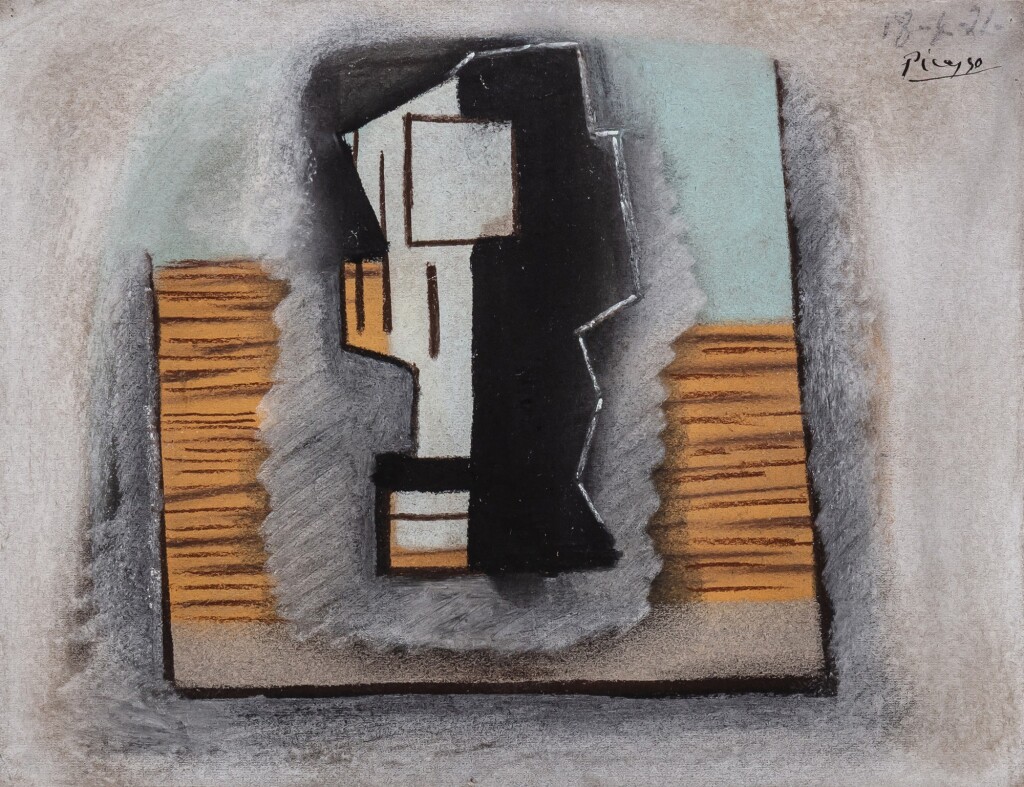
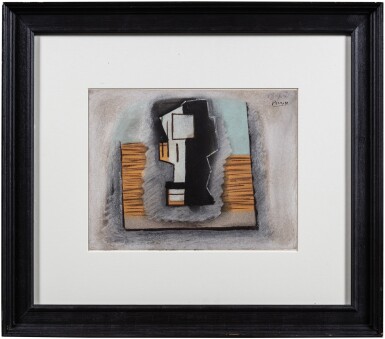
Nature morte
signed Picasso and dated 18-4-21 (upper right)
pastel on paper
24,9 x 32,6 cm; 9¾ x 12⅞ in.
Executed on 18 April 1921.
The authenticity of this work has been confirmed by Claude Picasso.
Condition report
Provenance
André Level, Paris
André Lefèvre, Paris (by 1963)
Private collection, Paris (by descent from the above)
Aguttes, Paris, 21 December 2007, lot 153 (consigned by the above)
Private collection, France (acquired at the above sale)
Aguttes, Paris, 5 December 2014, lot 43 (consigned by the above)
Private collection (acquired at the above sale)
Christie’s, London, 29 June 2022, lot 452 (consigned by the above)
Acquired at the above sale by the present owner
Exhibited
Paris, Musée national d’art moderne, Collection André Lefèvre, 1964, no. 251
Catalogue note
© Succession Picasso, Paris, 2026.
Additional Notices & Disclaimers
Catalogue note
Property from a Private European Collection
Pablo Picasso
Nature morte
Estimate
180,000 – 250,000 EURRegister to Bid
It is extraordinary to think that in 1921, Picasso painted Trois femmes à la Fontaine and Trois Musiciens; both canvases are held at the Museum of Modern Art (MoMA). The former is the paragon of the “Return to Order”; after the devastation of the War, Picasso excelled in this Arcadian Neoclassicism steeped in Mediterranean light. The latter is, one might say, the synthesis of Synthetic Cubism, which originated in 1907 and developed out of the initial phase of Analytical Cubism. Nature morte dates from this exceptionally rich year, in which Picasso devised a style of full-bodied forms with mythological inflections while continuing to explore—without ever exhausting it—the possibilities of Cubism.
While the central form of Nature morte may evoke a glass or a pitcher—both recurring structural elements in Cubist still lifes—the surrounding background is a juxtaposition of textures and materials rendered in trompe-l’œil that function as self-referential quotations. The grey sfumato recalls the color of the newspapers so often employed, while the faux-wood panels on either side of the composition similarly refer to the cut papers that appear from the earliest Cubist still lifes onward.
Formerly in the collection of André Level—French businessman and collector, notable for assembling the first collective fund dedicated to modern French art—the work later entered the collection of André Lefebvre. In 1962, this banker donated major works from his collection to the French national museums, including works by Léger, Braque, Juan Gris, and Picasso, among them a painting from the Cubist period, Our Future Is in the Air, now held at the Centre Pompidou.
Il est extraordinaire de penser qu’en 1921, Picasso peint Trois femmes à la Fontaine et Trois Musiciens ; les deux toiles sont conservées au MoMA. La première est le paragon du « Retour à l’ordre » ; après le désastre de la Guerre, Picasso excelle dans ce Néo-classicisme arcadien baigné de Méditerranée. La seconde est la synthèse si l’on ose dire du Cubisme synthétique qui trouve sa source en 1907 et dérive du Cubisme analytique initial. Nature morte date de cette année très riche où Picasso invente un style aux formes pleines et aux accents mythologiques tout en continuant à explorer sans jamais l’épuiser le Cubisme.
Tandis que la forme centrale de Nature morte n’est pas sans évoquer un verre ou un pichet qui sont l’un ou l’autre des éléments structurants et récurrents des natures mortes cubistes, l’arrière-plan alentours est une juxtaposition de textures et de matières en trompe-l’œil qui jouent comme des autocitations. Si le sfumato gris a la couleur des journaux force employés, le faux bois de part et d’autre de la composition fait de la même façon référence aux papiers découpés qui peuplent dès les premières natures mortes cubistes.
Provenant de la collection André Level, homme d’affaires et collectionneur français qui s’illustra en constituant la première collection d’art moderne français en fonds collectif, l’œuvre passa ensuite dans la collection d’André Lefebvre. En 1962, ce banquier fit don aux musées nationaux d’œuvres majeures de sa collection, parmi lesquelles des œuvres de Léger, Braque, Juan Gris, Picasso dont une toile de la période cubiste, Notre Avenir est dans l’air, aujourd’hui conservée au Centre Pompidou.
Pablo Picasso
1881 – 1973
Nature morte